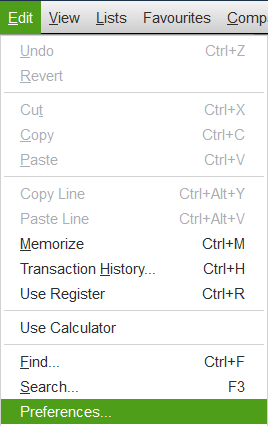
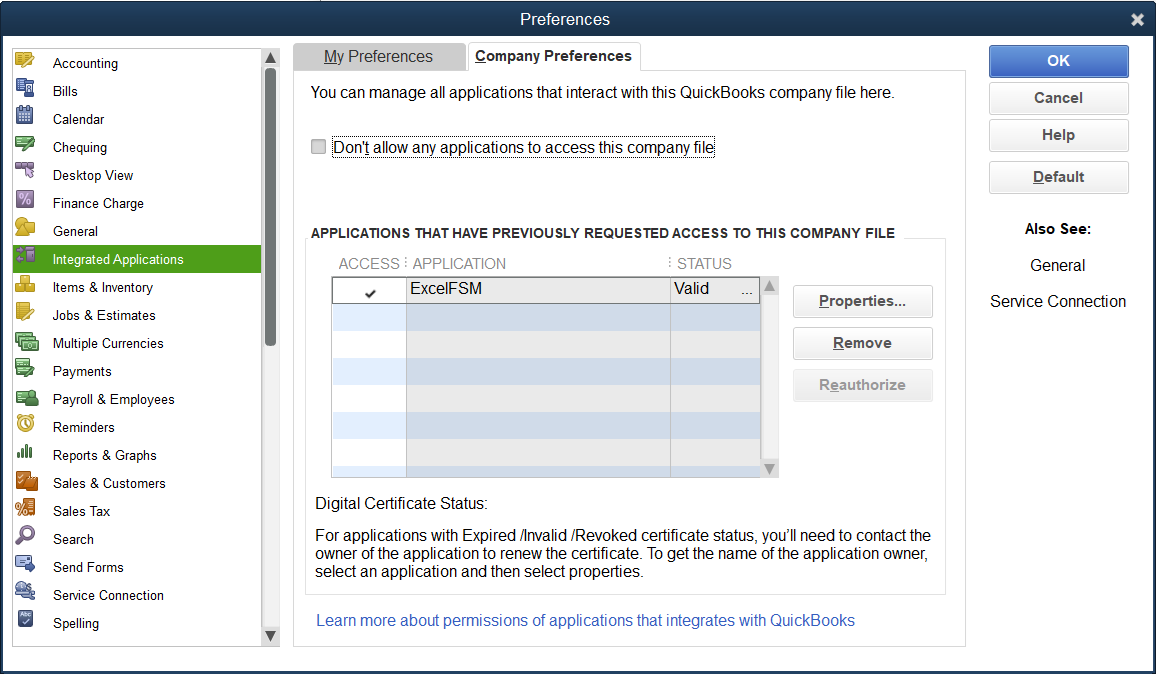
Select the accounting data file to associate (link) with the ExcelFSM workbook.
NOTE: The Intuit QuickBooks software must be installed on the PC running ExcelFSM.
NOTE: QuickBooks must be running with company file open for the use of the Select data file button.
Clicking Select data file you'll be asked to allow ExcelFSM to read and modify QuickBooks company file
(Note that ExcelFSM does not modify the QuickBooks company file. It only reads data)
Select oYes, whenever my QuickBooks company file is open
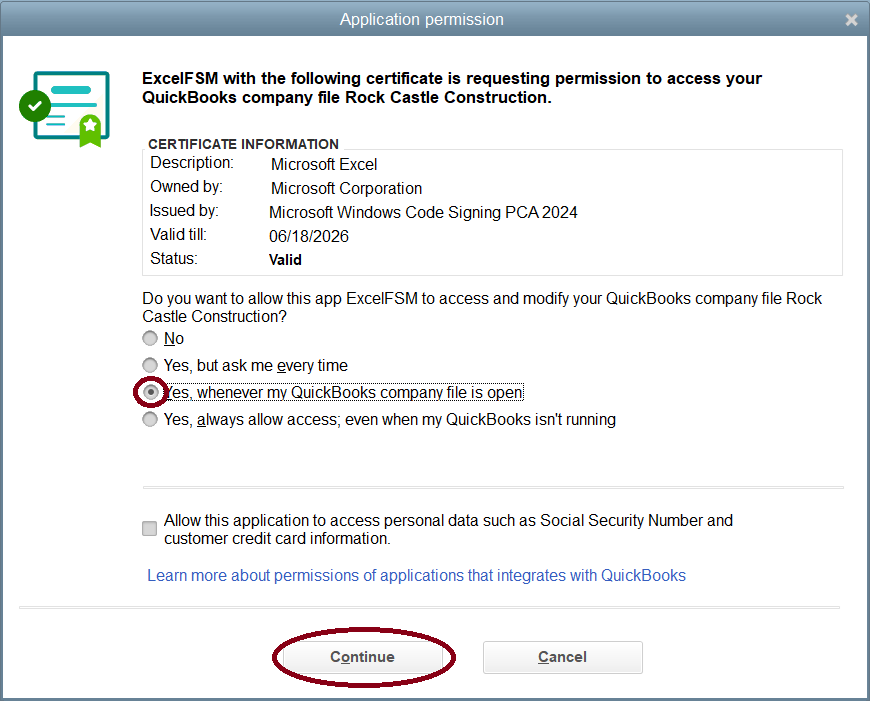
Click Continue
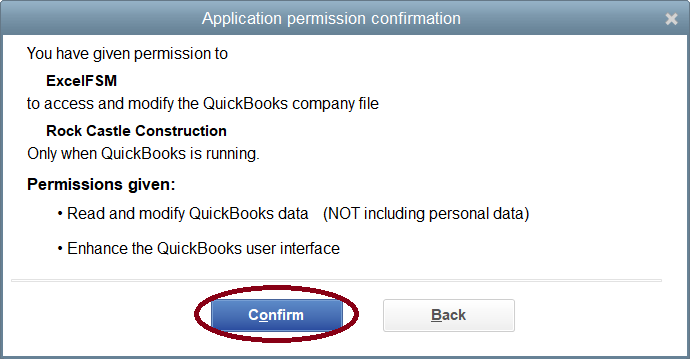
Click Confirm
ExcelFSM shows the following dialog to allow you to specify additional information about the trial balance data:
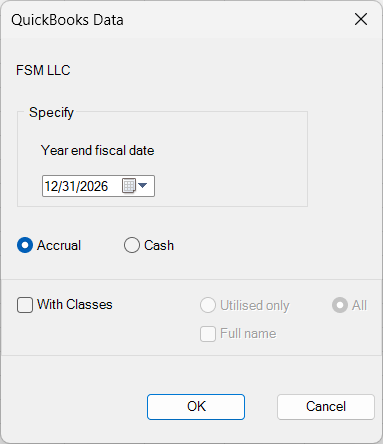
Year end fiscal date - The date will be used, along with the enterprise name, to identify the Excel workbook. The trial balance data of the specified fiscal year will be read. You will be able to select any date or date range within that fiscal year for your customized financial reports.
Accrual or Cash - Select accrual basis or cash basis for the trial balance data.
With Classes - Check if you want the "classes" to be part of the trial balance.
The classes will appear in the Chart of Accounts and identified by " | <Class name>:<Subclass name>" inserted at the end of the account's title.
Utilised only - Select that option if you do not want the classes of an account not utilised to be part of the trial balance.
Full name - Check that option is you want the full name of the subclasses.
Results
Click OK. The following actions occur:
•The trial balance data is imported and organized
•A new FSM workbook is created. It's name is
FSM<Enterprise><Year end fiscal date><A for Accrual or C for Cash><C if classes><U for Utilised only or A for All><F if Fullname>.
Using an existing ExcelFSM workbook to create one containing the financial reports for a different fiscal year.
Open the workbook
Click Select data file
Specify the year end fiscal date (in this case, this is the only parameter that can be modified)
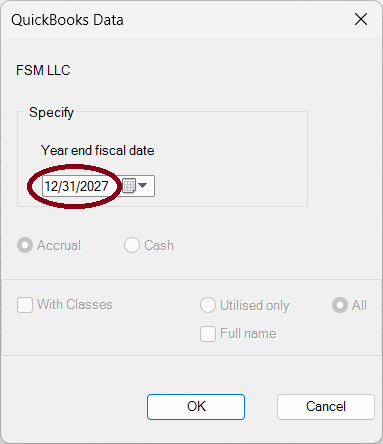
Click OK. The following actions occur:
•The trial balance data is imported and organized
•A new FSM workbook is created.
Modify all dates using the Select Date button
Your original workbook will not be altered.
Note: Since the name of the workbook contains the Enterprise name and year end fiscal date, the workbooks are easy to identify.
To see ExcelFSM among the Integrated Applications